
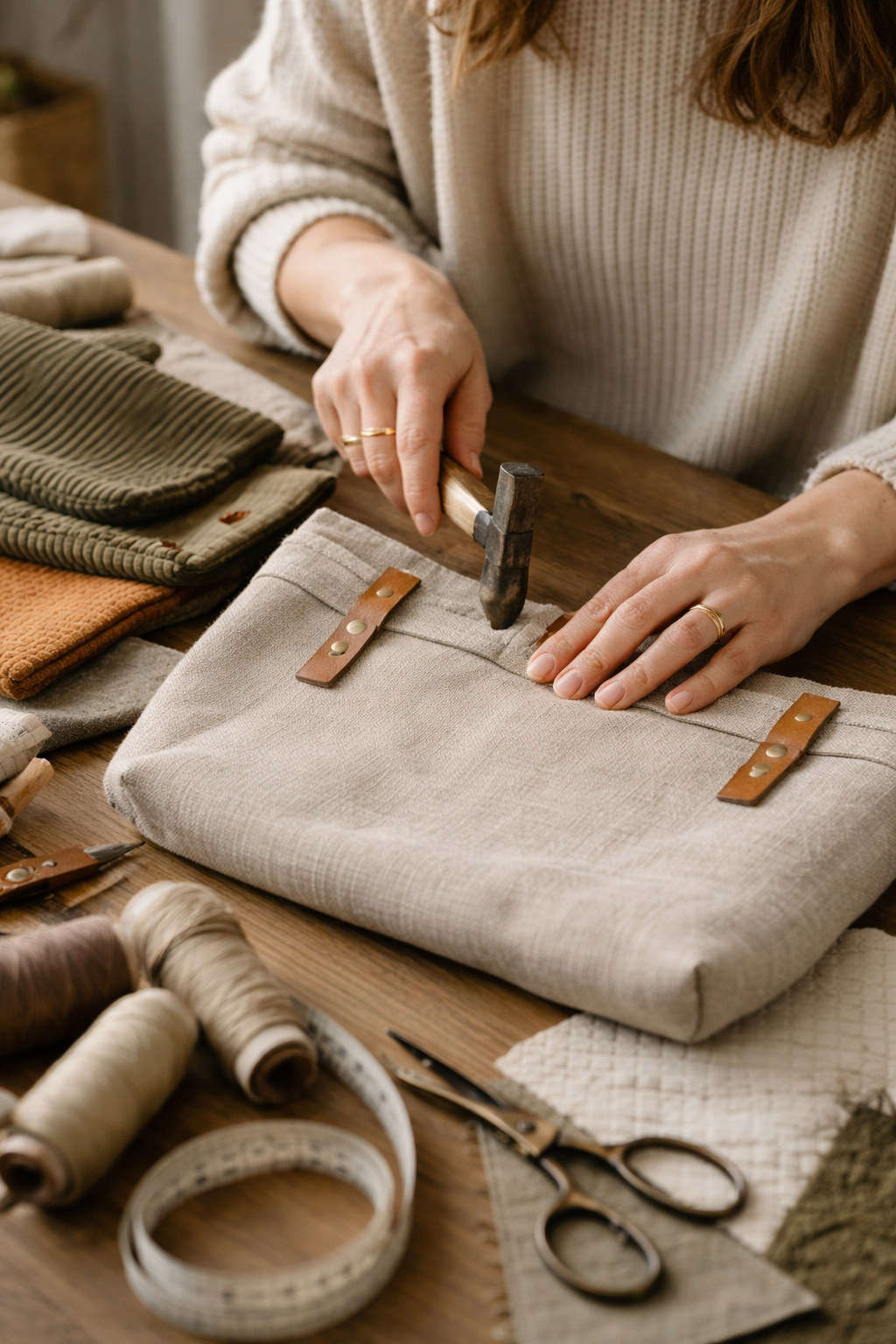
In a world of fast fashion and endless production lines, the word "handmade" has become both common and misunderstood.
But what truly makes a handmade bag different?
The difference is not only in how it looks — it lies in the process, the intention, and the quiet decisions made along the way.
1. It Begins With a Person, Not a Machine
Mass-produced bags are created in systems designed for speed and volume. The process is optimized for efficiency.
A handmade bag begins differently.
It starts with a person.
With an idea. With fabric laid out on a table. With adjustments made slowly, sometimes repeatedly, until the proportions feel right.
Each piece carries the influence of human judgment — not algorithmic precision.
That subtle human presence is part of what makes handmade special.
2. Design Is Thoughtful, Not Automated
In large-scale production, design choices are often made to reduce cost, simplify manufacturing, or standardize output.
In handmade work, design is more personal.
Details like:
- The curve of a zipper
- The placement of a pocket
- The weight of the fabric
- The balance of proportions
are considered carefully — often refined through trial and error.
Sometimes the first version is not perfect. Sometimes adjustments are made. That process shapes the final result.
3. Materials Are Chosen With Care
Handmade does not necessarily mean luxury materials.
It means intention.
Textures are chosen for how they feel. Colors are chosen for how they integrate into daily life. Fabrics are selected not only for appearance but for durability.
This doesn't always make handmade pieces perfect. But it makes them considered.
4. Small Variations Make Each Piece Unique
In industrial production, uniformity is the goal.
In handmade craft, small variations are natural.
The stitching may differ slightly. The texture may shift subtly. The form may carry a quiet individuality.
These are not flaws. They are traces of the process.
They remind us that something real was made — not stamped out in thousands.
5. It Encourages Slower Consumption
Handmade products are rarely impulse purchases.
They invite pause.
When someone chooses a handmade bag, they often consider:
- Who made it
- How it was made
- How long it will last
This mindset naturally supports slower fashion and more conscious buying — even without loudly labeling it as such.
Handmade Is About Intention
A handmade bag is not superior because it is handmade.
It is different because it carries intention.
It reflects:
- Care in design
- Time in construction
- A human hand guiding the process
In a fast-moving world, that difference can feel quietly meaningful.