
Slow Fashion vs Fast Fashion
To understand slow fashion, it helps to look at its opposite.
Fast fashion focuses on:
- Speed of production
- High volume
- Rapid trend cycles
- Lower cost materials
Garments and accessories are designed to be replaced quickly.
Slow fashion takes a different path.
It values:
- Thoughtful design
- Smaller production runs
- Longevity
- Quality over quantity
It doesn’t mean everything must be expensive or exclusive.
It means the process is intentional.
The Meaning Behind Slow Fashion
Slow fashion is built around a few simple principles:
1. Design With Purpose
Instead of following seasonal micro-trends, slow fashion prioritizes timeless pieces.
Items that:
- Integrate easily into daily life
- Stay relevant beyond one season
- Support a personal style rather than replace it
This creates continuity in a wardrobe.
2. Respect for Materials
Slow fashion considers where materials come from and how they are used.
This might include:
- Choosing durable fabrics
- Reducing unnecessary waste
- Working with materials that age well
Sustainability in this context is not about perfection.
It is about awareness.
3. Smaller Production
Many slow fashion brands operate in small batches.
This naturally reduces:
- Overstock
- Waste
- Excess production
It also allows more attention to detail in each piece.
Why Slow Fashion Still Matters
In a world of constant consumption, slow fashion creates pause.
It encourages questions like:
- Do I truly need this?
- Will I use it regularly?
- Does it fit my lifestyle?
These questions lead to more mindful decisions.
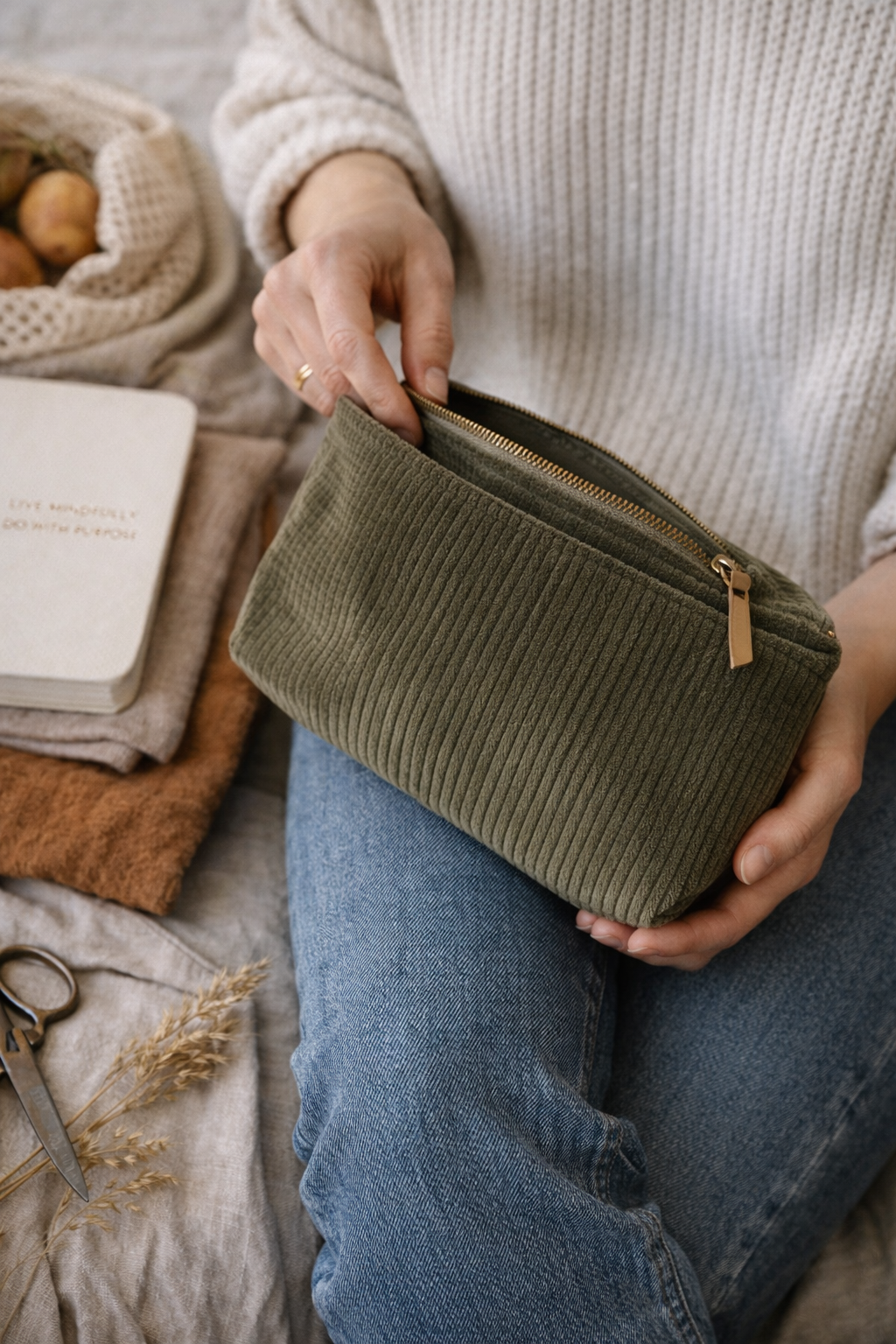
A handmade bag, for example, may not shout for attention — but it often reflects careful thought in design and construction.
That quiet difference is part of its value.
Slow Fashion Is Not About Perfection
Slow fashion does not require extreme minimalism.
It does not demand eliminating everything new.
Instead, it asks for balance.
Choosing pieces that:
- Feel right
- Last longer
- Fit naturally into daily life
This approach builds a wardrobe — and a lifestyle — that evolves more slowly and more intentionally.
A More Thoughtful Way Forward
Slow fashion is not loud.
It is not about rigid rules.
It is about awareness in small decisions.
Whether through handmade accessories, carefully chosen fabrics, or smaller production runs, slow fashion supports a calmer relationship with what we wear.
And in a fast-moving world, that shift can feel quietly powerful.